
Clinical protocol Back & neck
Back and neck pain from the feet up (the kinetic chain)
Low back pain is the world's leading cause of disability, and the chain that carries it starts at the feet: when they roll in, the shins, thighs and pelvis turn with them. How far up the chain the evidence reaches, three tests of the base, a foot-strengthening programme, and a plan in three steps: arrest, balance, strengthen.
Filed underFlat feet (overpronation)Feet
Patient explainer
A 2-minute explainer with every key point and its source on screen. Play it in the session, or send the patient view: the same video with three home tests, four foot exercises and the three-step plan, and nothing clinical.
Clinical summary
- What it is
- The body loads as one chain. Feet that roll in turn the shins and thighs inward and tip the pelvis forward (measured in standing studies); above the pelvis the link weakens and the evidence is mixed.
- How common
- Low back pain affected 619 million people in 2020, the world's leading cause of disability; neck pain affected 203 million.
- The foot link
- Women whose feet roll in as they walk had about 50% higher odds of low back pain (Framingham, 1,930 adults); men showed no link.
- Assess
- The one-leg stand against age norms, a barefoot mirror check of the arches and knees, and the big-toe lift. Retest after 6 weeks of training.
- First line
- Stay active. Train the feet for more than 6 weeks (short foot, toe control, heel raises, one-leg stand) alongside the usual back and neck care; insoles only with the training, never alone.
- Refer
- Emergency: symptoms in both legs, saddle numbness, bladder or bowel change, chest pain or major trauma. Urgent: fever, unwell, or rapidly worsening pain; for the neck, symptoms in both arms or legs, weakness or poor balance.
Start at the base
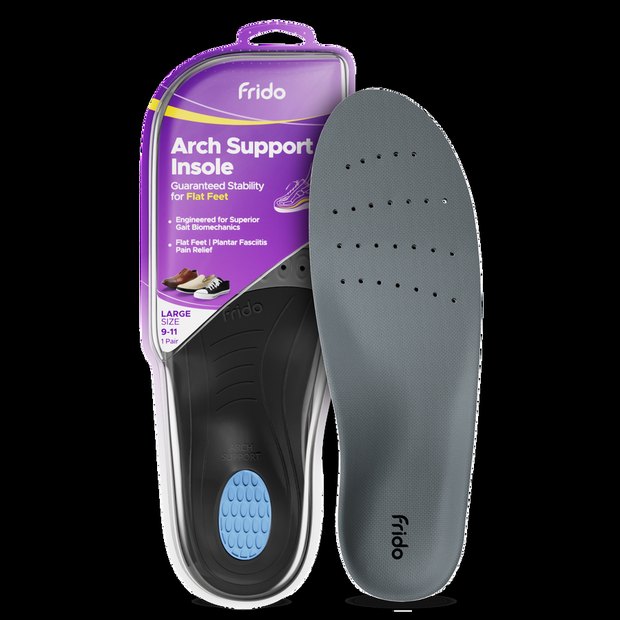
Frido Arch Support Insoles ₹1,299 ₹2,799
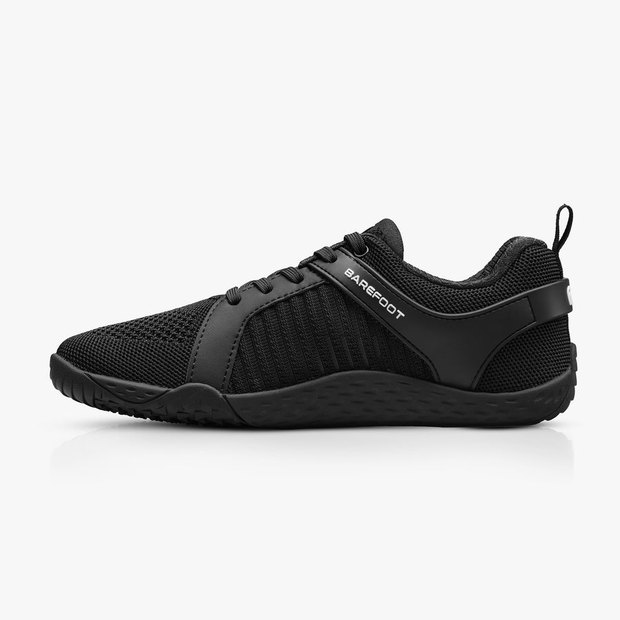
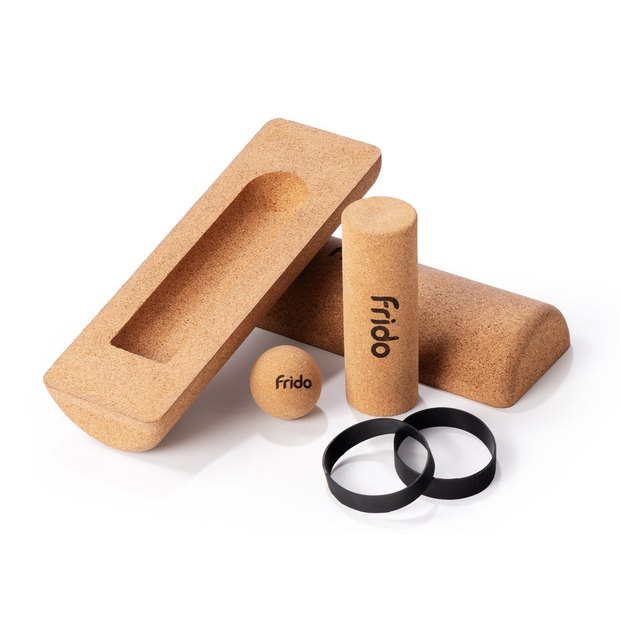
Barefoot Shoes to build foot strength as you walk; Portable Balance Trainer to make the one-leg stand harder.
Supports feet that roll in while the arch strengthens, paired with foot exercises. No product cures back or neck pain on its own.
The plan in three stages
1Relieve
Calm a flare enough to keep moving.
- Heat on your back or neck, 20 minutes at a time.
- A back belt only for heavy jobs during a bad spell, not all day.
- Keep moving: staying active is the core advice for back pain.
More on this: Step 1: Relieve the pain
2Restore
Keep the chain level through sitting and sleep.
- Support the curve of your lower back when you sit, and stand up often.
- A medium-firm bed. On a very hard one, a memory-foam layer can help.
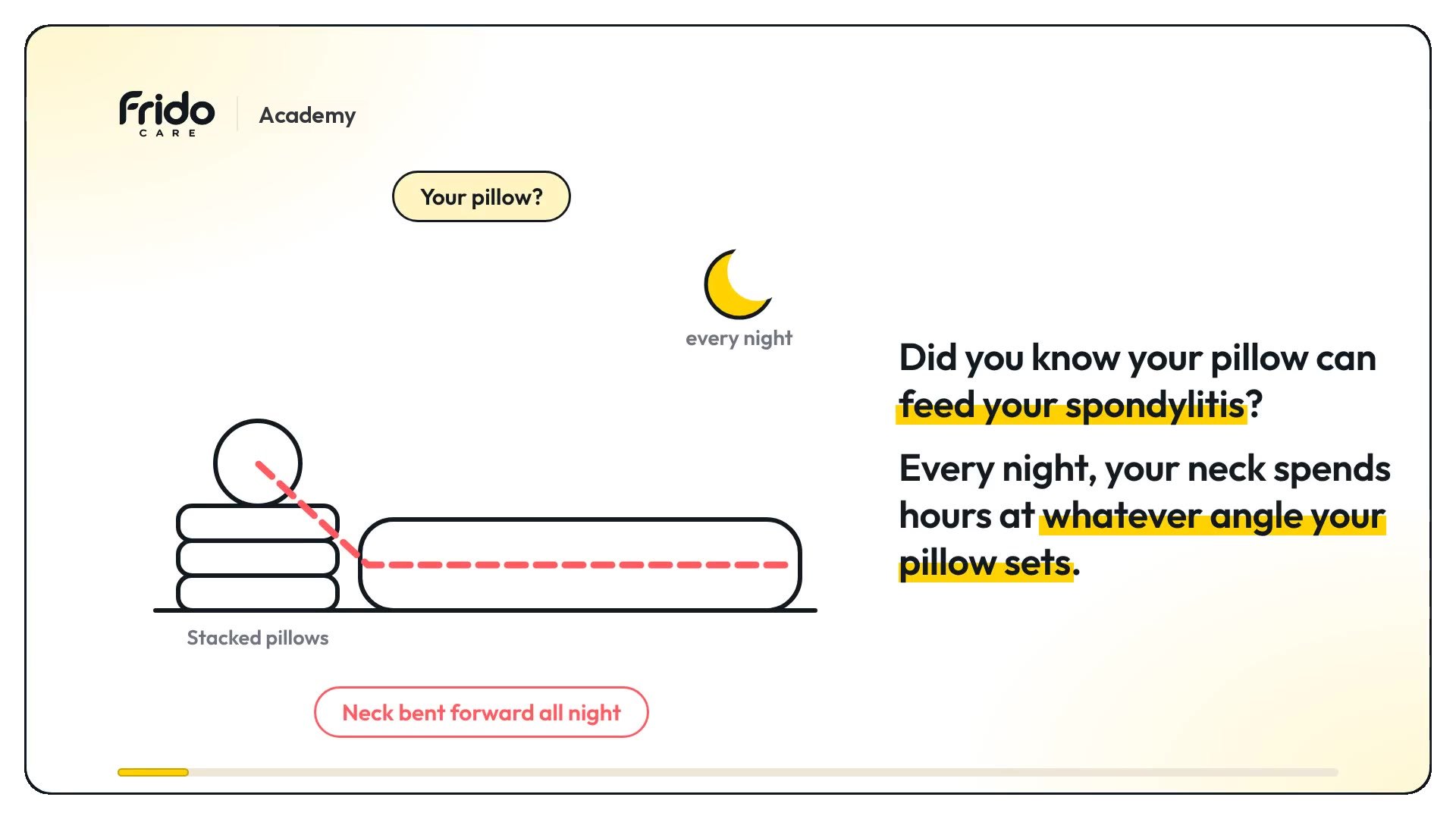
- A low, firm pillow that keeps your head level.
More on this: Step 2: Restore stability
3Reinforce
Build the base so the chain starts straight.
- Foot exercises every day, for more than 6 weeks: short foot (demo video, opens in a new tab), toe control (demo video, opens in a new tab), heel raises (demo video, opens in a new tab) and the one-leg stand (demo video, opens in a new tab).
- If your feet roll in, an arch insole supports them while they strengthen: with the exercises, not instead of them.
- Walk, and build up slowly if you switch to barefoot shoes.
- Redo the one-leg stand after 6 weeks.
More on this: Step 3: Reinforce: strengthen and preventStrengthening the feetExercises that build the base
One body, one chain
Every step sends force up one connected column: foot, shin, knee, thigh, pelvis, spine, shoulders and neck. In 35 healthy adults, wedges that rolled the feet in by 10° to 20° turned the shins and hips inward and tipped the pelvis forward (Khamis 2007). The shin is the hinge that passes the roll to the thigh, and the thigh to the pelvis (Khamis 2015).
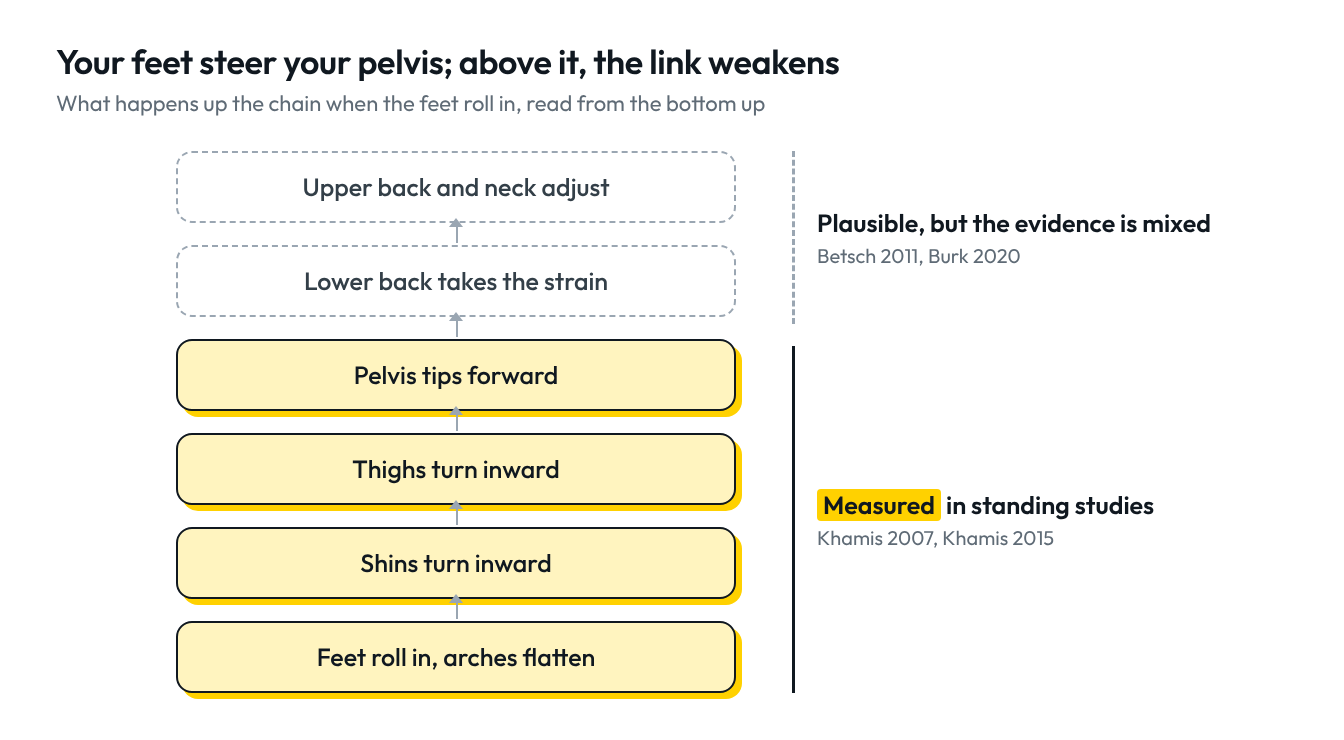
Tissue ties the links as well as bone. A fascial line runs from the sole through the calf and hamstrings to the spinal muscles, and tension can travel along it (Wilke 2016; Krause 2016). Its weakest joint is the first: the sole-to-calf link appeared in only 25 of 72 bodies studied, and fades with age (Wilke 2016).
Typical signs: arches that flatten and knees that turn in on standing, poor one-leg balance, and back or neck pain that builds with long standing or walking (Khamis 2007; Springer 2007).
What the feet do to the back
In 1,930 adults in the Framingham Foot Study, women whose feet rolled in as they walked had about 50% higher odds of low back pain; men showed no link (Menz 2013, via Consultant360). The wedge study's authors advise checking foot alignment whenever the pelvis or lower back is the problem (Khamis 2007).
Fixing the base helps some backs. In 225 adults with chronic low back pain, custom shoe orthotics improved pain and function over 6 weeks against no care (Cambron 2017, via NUHS). The orthotics came from a manufacturer linked to the study: one promising trial, not proof.
How far up it reaches: the neck
The neck sits at the far end of the chain, so its link to the feet is the least studied. Working the lower back line, such as calf and hamstring stretches, increased neck movement by about 5° (9%) across 8 small trials of 354 people: a small and uncertain gain (Burk 2020). The chain also loosens above the pelvis: in 51 adults, changing foot position shifted the pelvis but not the spinal curves (Betsch 2011).
So check the feet when the neck hurts, and give the neck its own care too: normal use, breaks from long sitting, and no long bed rest or soft collars (UH Sussex NHS).
Feet are one link, not the whole story
Strong feet are worth having, but they aren't a cure-all.
| Claim | What the evidence shows |
|---|---|
| Insoles prevent back pain | No. 6 trials, 2,379 people: no significant difference (risk ratio 0.78, 95% CI 0.50 to 1.23) (Chuter 2014) |
| Insoles treat existing back pain | Unclear. 5 trials, 293 people: no clear benefit (Chuter 2014); the 2017 orthotics trial is the main positive result since (Cambron 2017, via NUHS) |
| The back needs its own care | Yes. Stay active; walking, swimming, yoga and pilates may help (NHS) |
The fair reading: the feet are the first link, so check them, train them and support them when needed, alongside the rest of the back and neck care.
Check the base: three tests
| Test | How to do it | What it tells you |
|---|---|---|
| One-leg stand | Barefoot, eyes open, arms crossed, near a wall; the best of 3 tries (Prehab Guys) | Typical times: about 45 s at 18–39, 41 s at 40–59, 32 s at 60–69 and 21 s at 70–79 (Springer 2007). Well under the age band: the base needs work |
| Mirror check | Standing barefoot, watch the arches and knees | Arches flattening and knees turning in is the roll that travels up the chain (Khamis 2007) |
| Big-toe lift | Lift only the big toe while the others stay down, then swap | If the toes move together, start with the exercises below (NHS Fife) |
Retest after 6 weeks of training: arch exercises changed foot shape only in programmes longer than that (Cheng 2024). The patient view carries the same tests in plain words.
Strengthening the feet
Train the feet like any other muscle group: a few minutes a day, for more than 6 weeks. In 118 recreational runners, an 8-week foot-strengthening course cut the rate of running injuries 2.42-fold over a year (Taddei 2020).
- Short foot (demo video, opens in a new tab): draw the ball of the foot toward the heel without curling the toes.
- Toe control (demo video, opens in a new tab): the big-toe lift, toe spreading, and picking up small objects.
- Heel raises and toe rocks (demo video, opens in a new tab), holding a support.
- One-leg stand (demo video, opens in a new tab), fingertips on a wall, building up from 5–10 seconds.
Pair them with regular walking, which the NHS also lists among the activities that may ease back pain (NHS).
The Frido Care protocol: relieve, restore, reinforce
Pain travels along the chain, so the plan works along it too, in three steps: relieve the pain so the patient keeps moving, restore a level chain through the hours of sitting and sleep, then reinforce the base. The three tests show where the base stands.
Step 1
Relieve
Calm a flare enough to keep moving
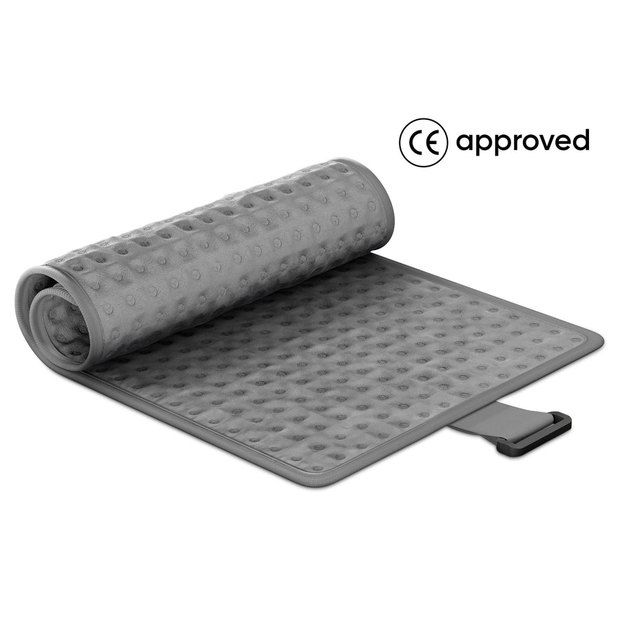 Orthopaedic Heating BeltElectric heat on a timer for the lower back₹2,599
₹3,500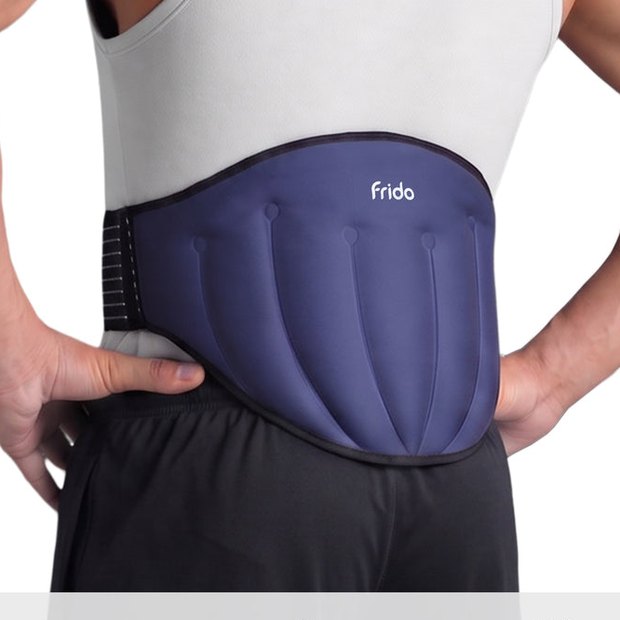 Hot and Cold Therapy BeltA gel belt you microwave or freeze₹1,299
₹1,500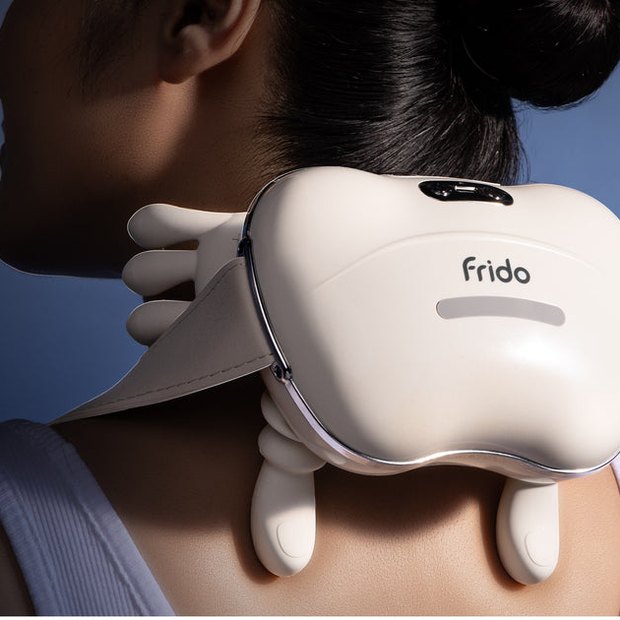 Five Finger Neck MassagerHeat and kneading for the neck₹3,999
₹5,000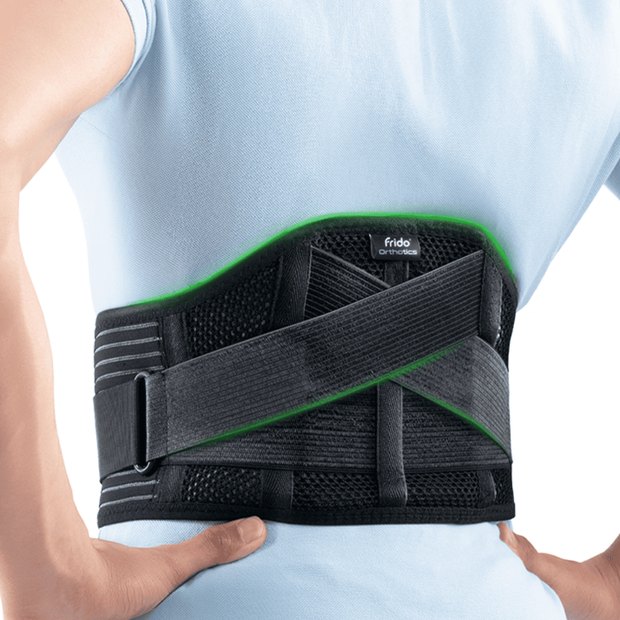 Lumbo Sacral BeltFor heavy tasks during a flare, not all-day wear₹1,299
₹2,405
Step 2
Restore
Keep the chain level through sitting and sleep
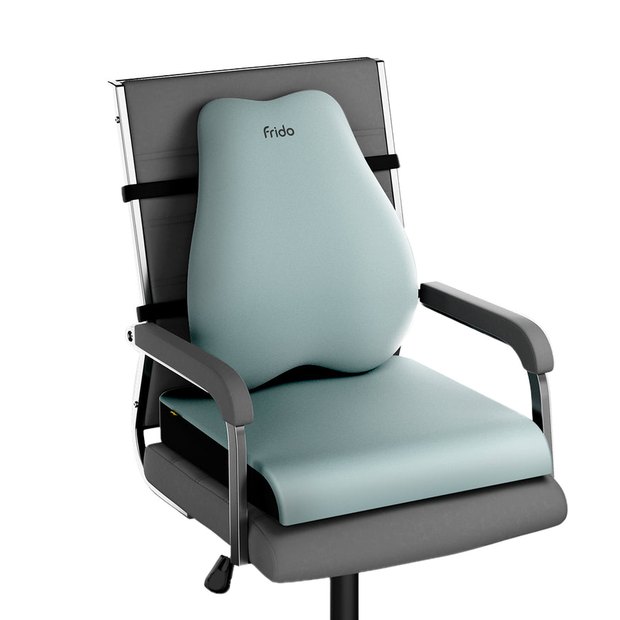 Cloud Seating ComboSeat cushion plus a backrest for the lower back's curve₹3,349
₹6,198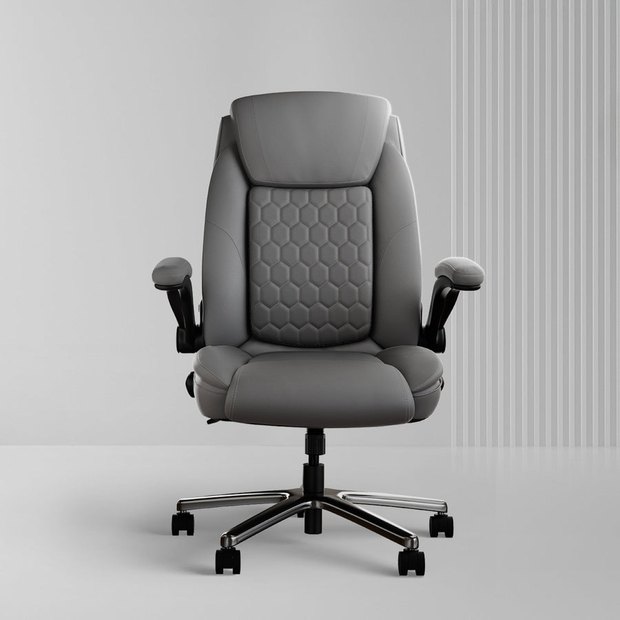 3D Posture Plus Ergonomic ChairAdjustable lumbar support for desk work₹17,499
₹30,000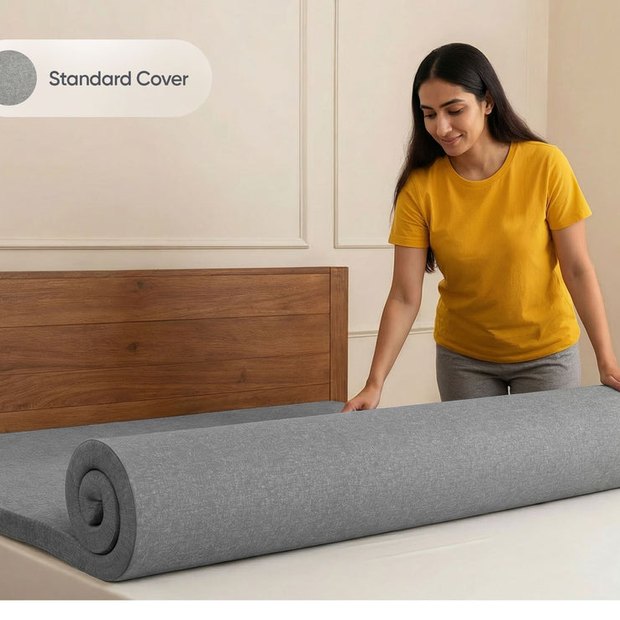 Ultimate Mattress TopperA memory-foam layer for a very hard bed₹4,409
₹7,599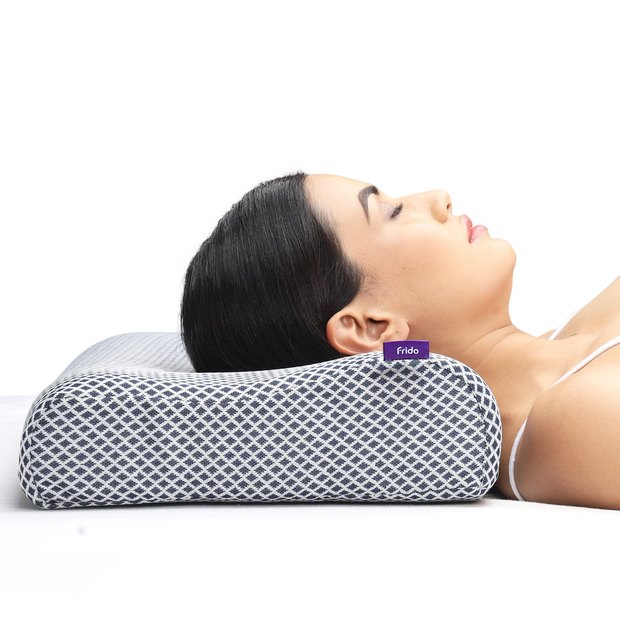 Ultimate Cervical PillowTwo heights; pick the one that keeps your head level₹1,199
₹2,500
Step 3
Reinforce
Build the base so the chain starts straight
Prices as listed on myfrido.com on 16 Oct 2026; check the product page for today's price.
Step 1: Relieve the pain
Calm a flare enough to keep moving, because staying active is the core advice for back pain (NHS).
| Option | What the evidence shows |
|---|---|
| Heat for the lower back (Heating Belt; Hot and Cold Belt) | Heat wraps give a small, short-term drop in pain, and adding exercise lowers it further; the evidence for cold is too thin to judge (French 2006) |
| Heat and kneading for the neck (Neck Massager) | The NHS suggests heat for neck pain, 20 minutes at a time (NHS); massage eases neck pain in the moment, with no lasting effect shown (Cheng 2014) |
| A belt for heavy days (Lumbo Sacral Belt) | In 197 people with subacute pain, a belt improved function at 90 days and more needed no medication (61% vs 40%) (Calmels 2009). But Cochrane calls the evidence unclear (van Duijvenbode 2008, Cochrane), and NICE says not to offer belts for managing back pain (NICE 2016) |
Use the belt for demanding tasks during a flare, not all-day wear.
Step 2: Restore stability
Keep the chain level through the long, still hours of sitting and sleep.
- Sitting. A backrest that supports the lower back's curve, as an NHS neck-pain leaflet advises for long sitting (UH Sussex NHS): the Cloud Seating Combo. For desk work, a highly adjustable chair plus ergonomics training slowed the build-up of aches over the day in a 12-month office trial; training alone didn't (Amick 2003).
- Sleeping. In 313 people with chronic back pain, a medium-firm mattress beat a firm one for pain in bed and disability at 90 days (Kovacs 2003). The Mattress Topper adds a memory-foam layer to a very hard bed.
- The neck at night. A low, firm pillow that keeps the head level with the body (NHS); the Cervical Pillow has two heights to pick from.
No support replaces movement: stand up and move as often as possible (UH Sussex NHS).
Step 3: Reinforce: strengthen and prevent
The root-cause step: build the base so the chain starts straight.
- Train the arch. In 46 people with low back pain and feet that roll in, short-foot exercises improved back pain, disability and foot posture; the group without them didn't change (Mahmoud 2022).
- Walk it stronger. In 57 runners, 8 weeks in minimalist shoes built foot muscle size and strength as well as foot exercises did (Ridge 2019). Frido's Barefoot Shoes have the zero-drop sole and roomy toe box of a minimalist shoe; build up over weeks, as the study's lead author advises (IDEA Health & Fitness).
- Add balance. The Portable Balance Trainer's two cork half-domes make a harder one-leg stand.
- Support the arch while it strengthens. In 40 people with painful flat feet, short-foot exercises plus insoles beat insoles alone for pain and function at 6 weeks (Elsayed 2023). Insoles alone haven't been shown to prevent back pain (Chuter 2014), and NICE says not to offer them for managing it (NICE 2016), so pair them with the training.
Does it cure back and neck pain? Partly
Each step works on a link the evidence points to, but no product cures back or neck pain on its own, and the best-supported treatment is still staying active and exercising (NHS; NICE 2016). The protocol is built to make that easier.
| Part of the problem | Helped? | Why |
|---|---|---|
| A flare that stops movement | Short term | Heat gives a small, short-term drop (French 2006) |
| Feet that roll in | Yes, with training | Short-foot exercises improved posture and back pain (Mahmoud 2022); insoles help most alongside them (Elsayed 2023) |
| Weak feet and poor balance | Yes | 8 weeks of exercises or minimalist shoes build foot strength (Taddei 2020; Ridge 2019) |
| Long sitting and poor sleep | Partly | Adjustable seating and a medium-firm bed help (Amick 2003; Kovacs 2003) |
| Neck pain | Least | The foot-to-neck link is small and uncertain (Burk 2020); the neck needs its own care (UH Sussex NHS) |
Can say: supports the feet, the seat and the sleep that load the chain; makes staying active easier; pairs with exercise. Can't say: cures back or neck pain; insoles prevent back pain; "clinically proven". We found no study of Frido's own products.
Assessment, referral and plan
Assess: the three tests of the base (one-leg stand against age norms, mirror check, big-toe lift), alongside the usual back and neck examination (Springer 2007; Khamis 2007).
SettleWeeks 0–2
- Keep moving; heat for flares; a belt only for heavy tasks.
- Check the seat, the bed and the pillow.
RestoreWeeks 2–6
- Daily foot programme: short foot (demo video, opens in a new tab), toe control (demo video, opens in a new tab), heel raises (demo video, opens in a new tab), one-leg stand (demo video, opens in a new tab).
- Insoles for feet that roll in, worn with the training; barefoot shoes built up slowly.
ReviewWeek 6 on
- Retest the three tests; progress balance to the half-domes.
- Reassess if pain isn't improving or any red flag appears.
In the Frido Care app, add a product to the plan only when your findings call for one; you accept, edit or drop every suggestion. Frido ships it to the patient directly.
Talking to the patient
Explain it in plain words
"Your body works like one chain, and your feet are the first link. When they roll in, your knees and hips turn with them. Stronger feet won't fix everything, but they give the rest of your back and neck care a straighter start."
Their daily routine
A few minutes of foot exercises a day for more than 6 weeks, a walk, breaks from long sitting, and heat during a flare. No long bed rest; the belt only for heavy tasks; insoles with the exercises, not instead of them (NHS; NICE 2016).
Send the patient view
The patient view has the explainer, the three home tests, the four exercises, the three-step plan and the safety-net in plain words, and leaves out everything clinical. Send it with Send to patient at the top of this page.
Exercises that build the base
| Exercise | How much | Demo | How-to |
|---|---|---|---|
| Short foot (draw the ball of the foot toward the heel without curling the toes) | 3–5 times, daily | Watch (demo video, opens in a new tab) | NHS Fife podiatry |
| Toe control (big-toe lift, toe spreading, picking up small objects) | 5 times each, daily | Watch (demo video, opens in a new tab) | NHS Fife podiatry |
| Heel raises and toe rocks (hold a support, rise onto the toes, rock back onto the heels) | 10 slow repeats, daily | Watch (demo video, opens in a new tab) | Royal Devon NHS: balance exercises |
| One-leg stand (fingertips on a wall) | 5–10 seconds, 3 times each side, then build up | Watch (demo video, opens in a new tab) | NHS: balance exercises |
Retest the one-leg stand after 6 weeks; foot shape changed only in programmes longer than that (Cheng 2024).
Sources
- Low back pain fact sheet, WHO, via the WHO Knowledge Action Portal
- GBD 2021 neck pain study (Lancet Rheumatology 2024), Kolling Institute
- Effect of feet hyperpronation on pelvic alignment in a standing position, Khamis S, Yizhar Z. Gait and Posture, 2007
- The relationship between foot and pelvic alignment while standing, Khamis S et al. Journal of Human Kinetics, 2015
- What is evidence-based about myofascial chains: a systematic review, Wilke J et al. Archives of Physical Medicine and Rehabilitation, 2016
- Intermuscular force transmission along myofascial chains: a systematic review, Krause F, Wilke J et al. Journal of Anatomy, 2016
- Low back pain tied to flat feet (Menz et al., Framingham Foot Study, Rheumatology 2013), Consultant360
- Shoe orthotics trial (Cambron et al., Archives of Physical Medicine and Rehabilitation 2017), National University of Health Sciences
- Can myofascial interventions have a remote effect on ROM?, Burk C et al. Journal of Sport Rehabilitation, 2020 (PEDro record)
- Influence of foot positions on the spine and pelvis, Betsch M et al., 2011
- The effectiveness of shoe insoles for the prevention and treatment of low back pain: a systematic review and meta-analysis, Chuter V et al. BMC Musculoskeletal Disorders, 2014
- Normative values for the unipedal stance test with eyes open and closed, Springer BA et al. Journal of Geriatric Physical Therapy, 2007
- Effects of short foot training on foot posture in patients with flatfeet: a systematic review and meta-analysis, Cheng J et al. Journal of Back and Musculoskeletal Rehabilitation, 2024
- Foot core training to prevent running-related injuries: a randomised controlled trial, Taddei UT et al. American Journal of Sports Medicine, 2020 (PEDro record)
- Back pain, NHS
- Neck pain, NHS
- Balance exercises, NHS
- Self-treatment of acute neck pain, University Hospitals Sussex NHS, 2025
- Intrinsic foot exercises, NHS Fife podiatry
- Balance exercises leaflet, Royal Devon NHS
- Heel raises video, Oxford University Hospitals
- Single-leg balance assessment, The Prehab Guys
- Low back pain and sciatica in over 16s (NG59), recommendations 1.2.2 to 1.2.4, NICE
- Superficial heat or cold for low back pain, French SD et al. Cochrane Database of Systematic Reviews, 2006 (PEDro record)
- Efficacy of massage therapy on pain and dysfunction in patients with neck pain: a systematic review and meta-analysis, Cheng YH, Huang GC. Evidence-Based Complementary and Alternative Medicine, 2014 (PEDro record)
- Effectiveness of a lumbar belt in subacute low back pain: an open, multicentric, and randomized clinical study, Calmels P et al. Spine, 2009 (PEDro record)
- Lumbar supports for prevention and treatment of low back pain, van Duijvenbode I et al. Cochrane Database of Systematic Reviews, 2008
- Effect of office ergonomics intervention on reducing musculoskeletal symptoms, Amick B et al. Spine, 2003 (Institute for Work & Health summary)
- Effect of firmness of mattress on chronic non-specific low-back pain: randomised, double-blind, controlled, multicentre trial, Kovacs FM et al. Lancet, 2003 (PEDro record)
- Examining the efficacy of short foot exercises as an effective stand-alone treatment for mechanical low back pain associated with foot overpronation, Mahmoud WS. Isokinetics and Exercise Science, 2022 (PEDro record)
- Walking in minimalist shoes is effective for strengthening foot muscles, Ridge ST et al. Medicine and Science in Sports and Exercise, 2019 (PEDro record)
- Minimalist shoes and stronger foot muscles, IDEA Health & Fitness
- The combined effect of short foot exercises and orthosis in symptomatic flexible flatfoot: a randomized controlled trial, Elsayed W et al. European Journal of Physical and Rehabilitation Medicine, 2023 (PEDro record)
- Exercise videos: The Short Foot exercise (Elevate Chiropractic); "Toe Yoga" exercises (3DPT), YouTube
- Product pages: Orthopaedic Heating Belt, Hot and Cold Therapy Belt, Five Finger Neck Massager, Lumbo Sacral Belt, Cloud Seating Combo, 3D Posture Plus Ergonomic Chair, Ultimate Mattress Topper, Ultimate Cervical Pillow, Barefoot Shoes, Portable Balance Trainer, Arch Support Insoles, myfrido.com, 16 Oct 2026
For physiotherapists and doctors
Use these guides with your patients
Every guide has a plain-language patient view and a printable home guide to share after a session. Certifications & Training, leading to Frido Verified Partner, is coming soon.