Hip & buttock
Pain in your buttock that runs down your leg?
It may not be your spine. A small muscle in your buttock can squeeze the nerve to your leg, and long hours of sitting make it worse. Here is what is going on and what you can do about it.
Watch first
The whole thing in 1:12. Each part below has its own short clip.
Your plan in three stages
1Relieve
Take the pressure off the nerve so the ache settles.
- Break up sitting: stand up and move every 30 to 45 minutes.
- Sit on a memory foam cushion on the chair you use most, so your weight spreads instead of landing on the sore spot.
- Stretch gently: the figure-4 stretch (demo video, opens in a new tab), 30 seconds, 3 times, 2 to 3 times a day. A stretch, never pain.
- Painkillers only as your doctor advises.
More on this: Take the pressure off while you sitYour home plan
2Restore
Keep the nerve calm through the long hours of sitting.
- Take your wallet out of your back pocket.
- Don't sit with the sore leg crossed over the other.
- Set up the seat: feet flat, desk at elbow height, and check you still reach the car pedals.
- Breaks matter more than any cushion: keep standing up every 30 to 45 minutes.
More on this: Why sitting makes it worseTake the pressure off while you sit
3Reinforce
Strengthen the hip so the pain doesn't come back.
- From about week 2, hip strength as your physio sets it: clamshells (demo video, opens in a new tab), side-lying leg lifts (demo video, opens in a new tab) and bridges (demo video, opens in a new tab), 2 to 3 sets of 10 to 15, 3 times a week.
- From week 6, build back up to running, stairs and sport gradually.
- Keep a short stretch and strength routine once you're better.
- See your physio or doctor if it hasn't eased after 3 weeks, or your leg feels weak.
More on this: Your home planWhen to get help
What is going on
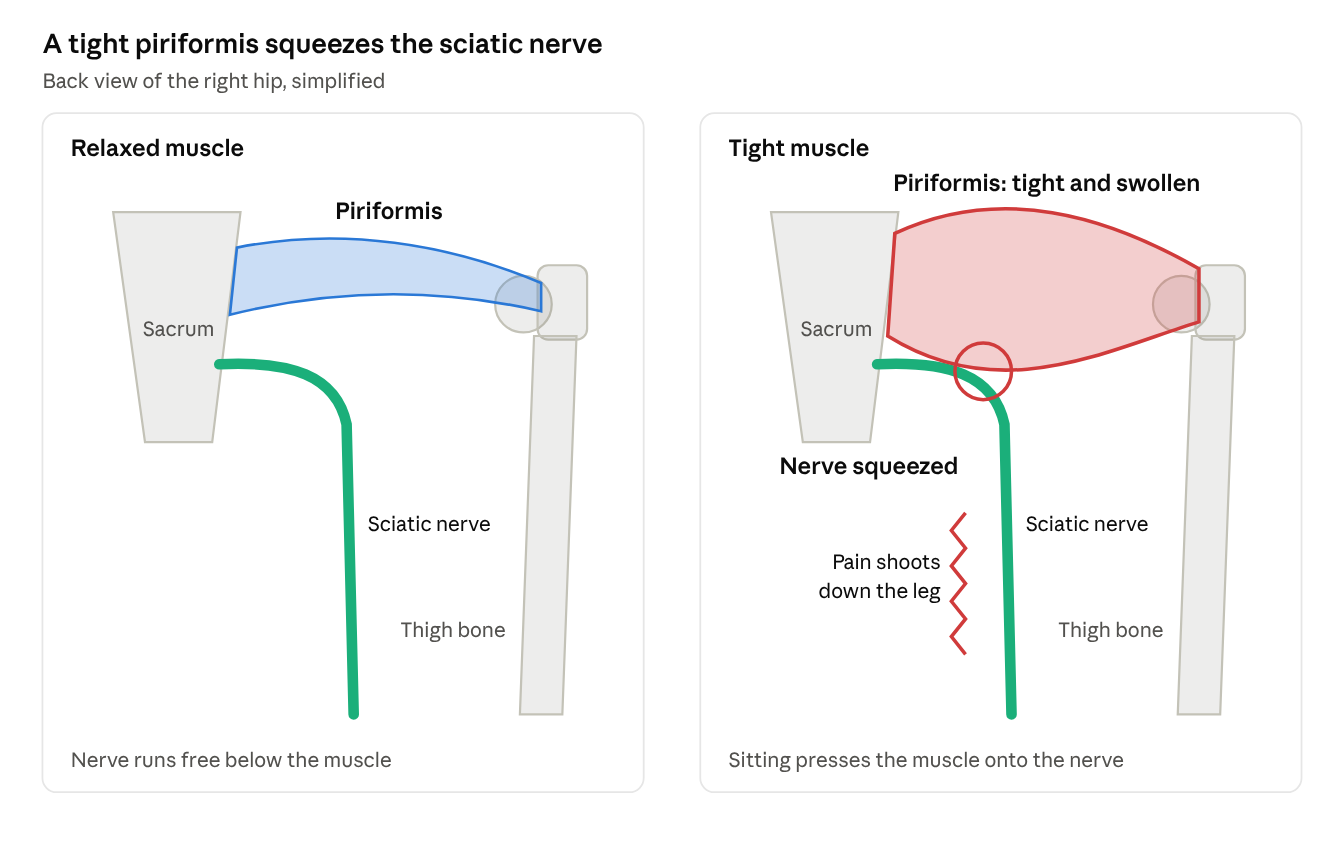
Deep in your buttock there is a small muscle called the piriformis. The main nerve to your leg, the sciatic nerve, runs right beside it.
When the muscle gets tight or swollen, it squeezes the nerve. You feel that as pain in the buttock that can travel down the back of your leg. Because it feels like sciatica from the spine, it is sometimes called pseudo-sciatica.
What you may feel
- A deep ache or burning in one buttock
- Pain down the back of your leg
- Tingling or numbness in the leg
- Worse after sitting for a long time, on stairs or when running
Why sitting makes it worse
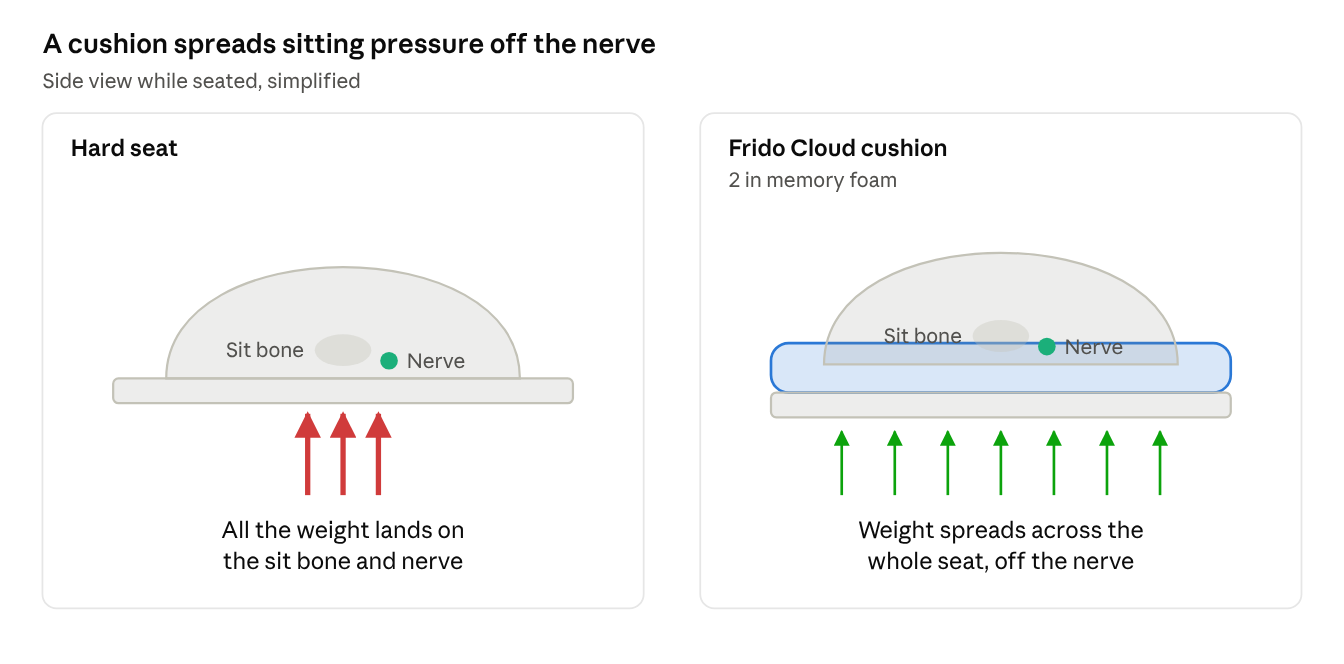
When you sit on a hard seat, your weight presses down on one small spot: right over the muscle and the nerve. Hours of that keep the nerve irritated.
Two everyday things add to it: a wallet in your back pocket, which tilts you to one side, and sitting with the sore leg crossed over the other, which pulls the muscle tight over the nerve.
It can feel like a slipped disc
This pain is easy to mistake for a slipped disc, and the other way round. There is no single scan or test that shows it, which is why your physiotherapist checked your back and hip before deciding. Please don't change your treatment based on this page alone.
Take the pressure off while you sit
A memory foam seat cushion spreads your weight across the whole seat instead of one spot, so there is less pressure on the muscle and nerve while you sit. It doesn't cure the problem. It makes sitting easier while your exercises do their work.
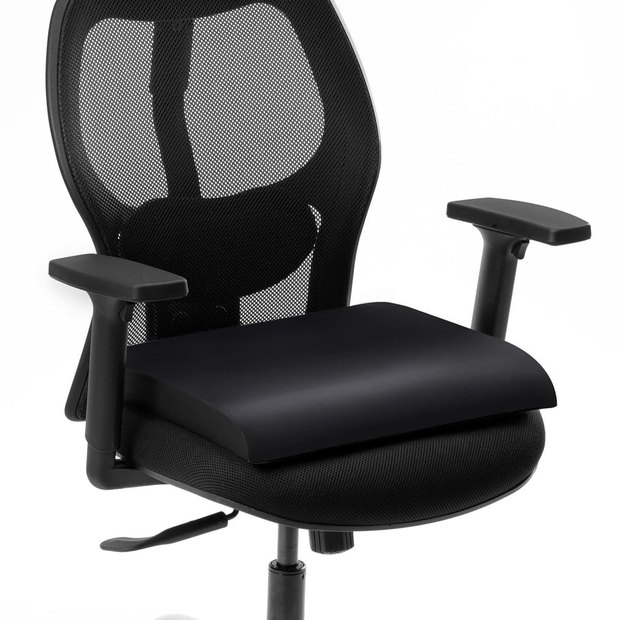
- Frido Slim Seat Cushion (₹1,299): thinner, if the Cloud lifts you too high at your desk or in the car
- Frido Portable Travel Seat Cushion (₹1,299): folds up, for trains, flights and cabs
Using it
- Put it on the chair you sit on longest, and sit right back on it.
- It raises you a little, so check your feet still rest flat and your desk is at elbow height. If you drive, check you still reach the pedals comfortably.
- Still get up every 30 to 45 minutes. The cushion helps, but breaks matter more.
Your home plan
Do these every day, along with the exercises your physiotherapist gave you.
- Stand up and move every 30 to 45 minutes. Set a reminder on your phone or watch.
- Take your wallet out of your back pocket, and try not to sit with the sore leg crossed over the other.
- Stretch the muscle. Lie on your back, put the ankle of the sore leg on the opposite knee, and gently pull that knee towards your chest until you feel a stretch in the buttock. Hold 30 seconds. Do it 3 times, 2 to 3 times a day. It should feel like a stretch, not pain. Watch how to do it (demo video, opens in a new tab)
Most people feel better within 1 to 3 weeks of doing their exercises regularly.
When to get help
Contact your physiotherapist or doctor if:
- your leg feels weak, or your foot starts to drag
- you get back pain together with the leg pain
- the pain hasn't eased after 3 weeks of doing your plan