Nose & breathing
Can't breathe through your nose at night?
Most of the blockage sits in one small spot just inside your nostrils. When it closes, you breathe through your mouth, which brings snoring, a dry mouth and tired mornings. Here is what closes it, and what opens it again.
Watch first
The whole thing in 1:55. Each part below has its own short clip.
Your plan in three stages
1Relieve
Open the nose tonight.
- Rinse with saltwater if you're stuffy. Watch how (demo video, opens in a new tab)
- Sleep with your head raised.
- If pulling your cheek outward helps you breathe, wear a nasal strip at night.
- Skip the fixes that backfire: no decongestant spray for more than 5 days, no menthol rubs, no taping your mouth.
More on this: Quick fixes that backfireWhat actually worksWhere a Frido strip fits
2Restore
Keep the nose open, night after night.
- Find your type: an allergy, a spray rebound, the shape inside the nose, soft side walls, or lying flat.
- If you were given a steroid spray, use it every day: it takes days to weeks to work.
- Keep to the nightly plan: rinse, spray if prescribed, strip if it helps, head raised.
More on this: Find your typeYour nightly plan
3Reinforce
Train the airway and check your progress.
- If you snore, do the tongue and throat exercises every day. Watch how (demo video, opens in a new tab)
- Score your nose now and again after two weeks of the plan.
- Go back to your physio or doctor if one side is always blocked or nothing has changed after 6 weeks.
More on this: Check yourselfWhen to see a doctor
What is going on
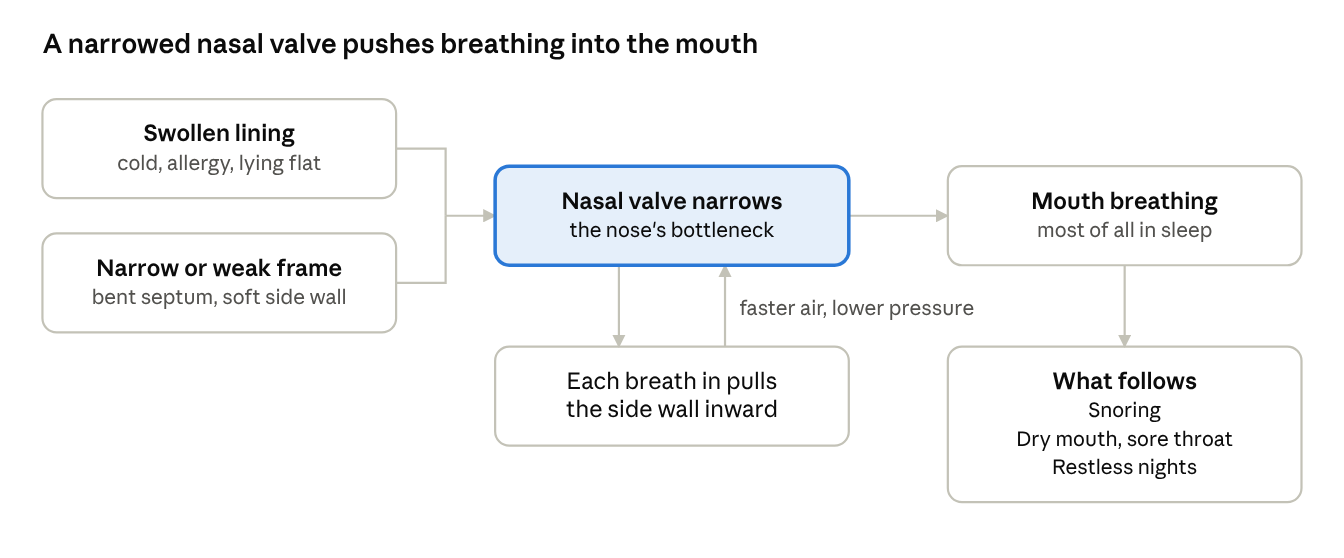
Just inside your nostrils is a small doorway called the nasal valve. It is the narrowest part of your nose, so most of the blockage happens there.
When the lining swells, or the soft sides of your nose get sucked inward as you breathe in, the doorway closes. Your body then switches to breathing through your mouth.
What it does to you
- Breathing through your mouth at night
- Snoring
- Waking with a dry mouth or sore throat
- Feeling tired in the morning, even after a full night
Check yourself
It takes 30 seconds. Score each line from 0 (no problem) to 4 (severe) for the past month. Add them up and multiply by 5.
| Over the past month, how much of a problem was... | Score (0–4) |
|---|---|
| Nasal congestion or stuffiness | |
| Nasal blockage | |
| Trouble breathing through my nose | |
| Trouble sleeping | |
| Not enough air through my nose during exercise |
5 to 25 is mild, 30 to 50 moderate, 55 to 75 severe and 80 to 100 extreme. Score yourself again after two weeks of your plan, and bring both scores to your next visit.
Find your type
The clue usually tells you what is closing your nose.
| If you notice... | It's likely |
|---|---|
| Sneezing and itchy eyes around dust, pets or pollen | An allergy swelling the lining |
| It's worse each time a decongestant spray wears off | The spray itself keeping the lining swollen |
| One side is always worse | The shape inside your nose |
| Pulling your cheek outward helps you breathe | Soft side walls caving in |
| It's worse at night than in the day | Lying flat |
Quick fixes that backfire
- A decongestant spray every night. Used for more than 5 days, it can make the block worse.
- Menthol rubs. Your nose feels clearer, but it isn't actually more open.
- Taping your mouth shut. It doesn't open your nose, and it's risky when your nose is blocked.
What actually works
There are three ways to open the nose. Your physiotherapist or doctor will match them to your type.
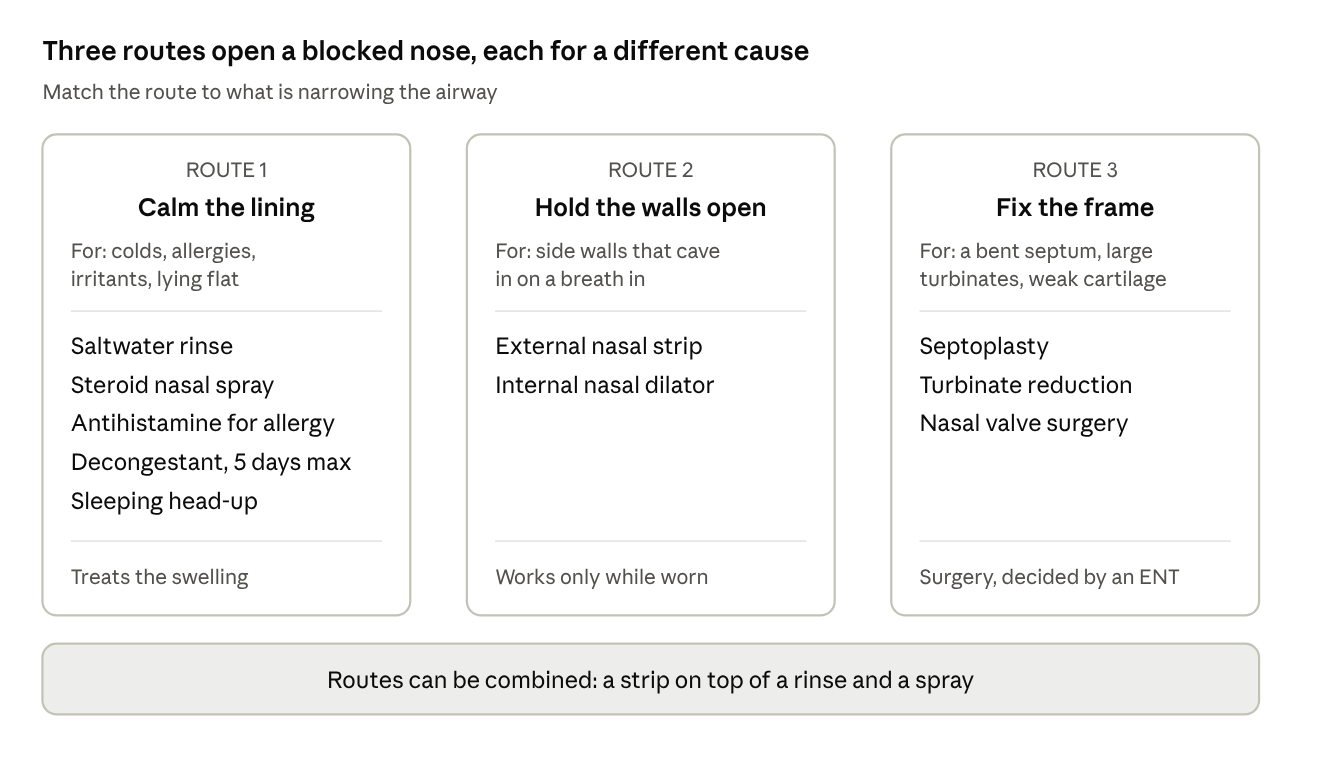
- Calm the lining. A saltwater rinse, a steroid spray if you have an allergy, and sleeping with your head raised.
- Hold the walls open. A nasal strip across the nose at night.
- Fix the frame. If the shape inside your nose is the cause and nothing else helps, a specialist may suggest surgery.
Where a Frido strip fits
A nasal strip works like a spring. It lifts the soft sides of your nose outward and holds the doorway open while you sleep. It helps most if pulling your cheek outward makes breathing easier.
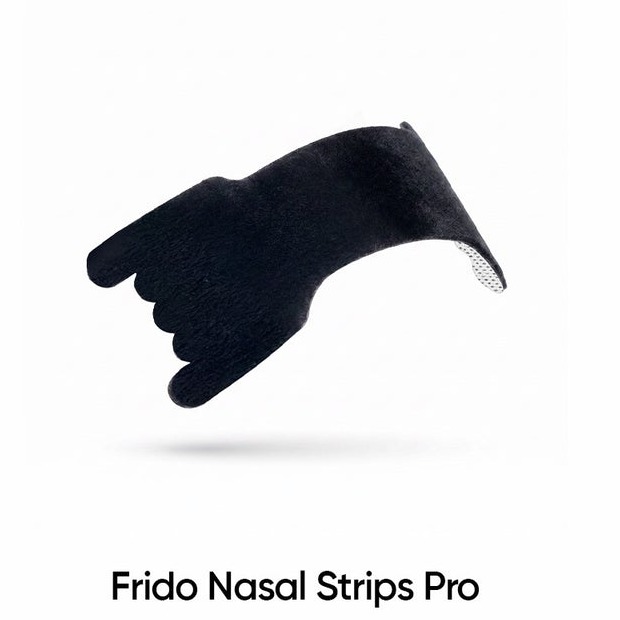
Recommended
₹499 ₹1,000 · Breathable fabric, sweat-resistant grip up to 12 hours, pack of 15
- Frido Nasal Strips (₹399): clear strips, for a cold or a flight
The honest part: it helps with one cause, the sides caving in, and only while you wear it. It doesn't clear mucus, treat an allergy, straighten the inside of your nose or treat sleep apnoea.
Putting it on
- Wash and dry your nose first.
- Place the strip across the widest part of your nose, just above where the nostrils flare.
- In the morning, wet it before you peel it off.
Your nightly plan
- Rinse with saltwater if you're stuffy. Watch how to do it (demo video, opens in a new tab)
- Use your steroid spray if you were given one. It needs daily use for days to weeks to work.
- Put on a strip if pulling your cheek outward helps.
- Sleep with your head raised.
- If you snore, do your tongue and throat exercises every day. Watch how to do them (demo video, opens in a new tab)
Don't tape your mouth shut, and don't use a decongestant spray for more than 5 days. Score yourself again after two weeks.
When to see a doctor
Come back to your physiotherapist or doctor if:
- one side is always blocked
- nothing has changed after 6 weeks of your plan